a·cu·men [ak-yuh-muhn] noun: keen insight; shrewdness

Welcome to Oil Acumen. All Oilers, all the time... Occasionally other stuff.

Thursday, 22 September 2011

09/22/11 11.9 Odds & Ends: No Doughty Trade, Foster, Modano


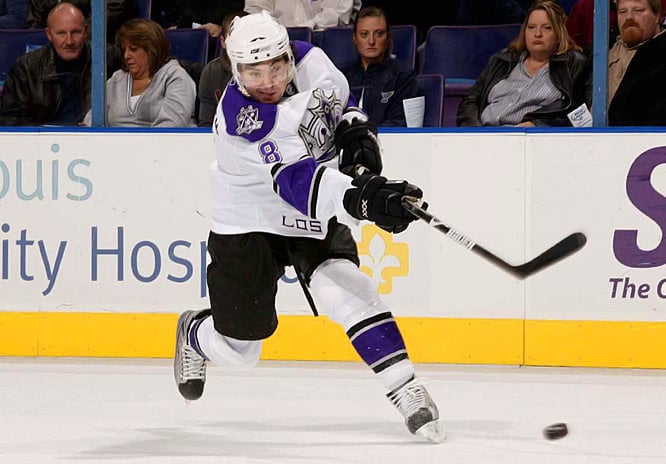
Drew Doughty continues to hold out on his contract negotiations, but he won't be traded because of it. Let's nix the rumors and trade ideas - a deal is going to get done. However, this article is suggesting that the Kings want a deal longer than six years so as to avoid Anze Kopitar and Doughty becoming UFAs at the same time. Doughty has rejected deals for longer than five years because he doesn't want to give up valuable years of Unrestricted Free Agency.

The longer this goes, the more the fans will favor Doughty; but he might actually be in the right here. Dean Lombardi is thinking about the future, which is a good thing for a General Manager to do, but his team is in win-now mode. If Doughty misses a significant amount of playing time because he remains unsigned, Lombardi may not have the GM's chair in LA five years from now anyway. The Kings can't afford to stumble out of the gate, because even the wins in October count when playoff seeding is determined. LA is a good team, but they'll still be in tough to win the division against San Jose. That means that they have to amass as many points as possible to get home ice advantage in the post season.

Most of this Kings team is going to have to be replaced in five years anyway, so by that time their cap situation will be completely different. Whether Doughty signs in 5 years or 6 or 7 won't really matter as long as Lombardi's new hires are signed to fit around what will be two very large future deals for Doughty and Kopitar.


Kurtis Foster is going to miss 2-4 weeks for the Anaheim Ducks because a wire is being removed from his surgically repaired leg. Oilers: 2, California GMs: 0. In the end the trade of Foster for Sutton is a nothing move because Sutton isn't in the long term plans anyway and Foster didn't work out. If Sutton is healthy for the start of the season, the Oilers can call it a small victory. Provided that Foster doesn't rack up 40+ points this year, that is.
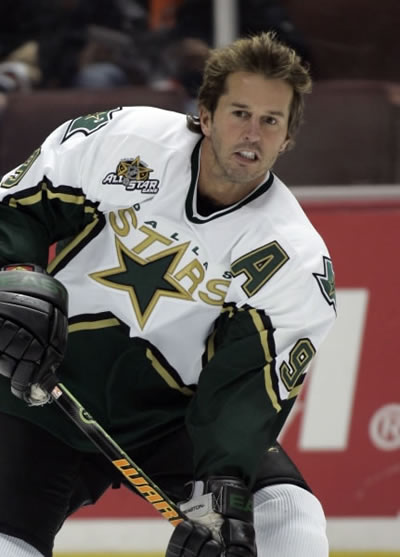

Mike Modano's retirement means that all Oilers fans can breath a sigh of relief. He may not have been the same Oiler killer that he was in years gone by, but now it really feels like it's the Oilers' time. In all seriousness, Modano was a fantastic player and a deserving first overall pick. If Nugent-Hopkins or Taylor Hall turn out as well as Modano did, all Oilers fans should be happy.

Tuesday, 20 September 2011

09/20/11 65.0 Double Vision


Another set of eyes is exactly what an Edmonton hockey fan needed tonight. If you didn't go to the home game and you're anything like me, you probably tried to watch both games at once online. It was a case of sacrificing a little bit of the details to get a sense of the overall picture.

There was simply too much to watch in both games to watch just one of them.

In Edmonton, the Oilers group rallied from a 3-0 deficit and outplayed their opponent after the first period, only to be downed by a late goal. The line of Paajarvi, Lander and Omark looked like the best one from either team on this night. Lander continued his strong play with a goal and an assist in this first step up from the Young Stars Tournament. Lander is used to the SEL, so it's no surprise that he has continued to be a force. It's possible that Lander could earn a spot on the NHL team, but one wonders if that's the best thing for him. He'll be a key contributor to the squad in Oklahoma City, and the playing time he gets down there would serve him well. He'll probably find himself in a similar situation to what Linus Omark went through last year. As soon as Brule suffers the inevitable injury, the Oilers will be burning up the phone lines to get Lander back to E-Town.

Unfortunately, Nikolai Khabibulin allowed 3 goals on the 10 shots he faced in half a game of action and didn't do much to alleviate fears that he won't be bouncing back - and this was only the pre-season. Tyler Bunz looked solid as always, and the goal he allowed came through a pile of traffic with the Wild on the powerplay.

Taylor Hall was a minus-2 in this game. He showed offensive flair as always, but couldn't convert. Then again, it was his first game action since early March.

Antti Tyrvainen scored the tying goal and seemed to play well enough that he may survive the next round of cuts.

In Saskatoon, Ryan Nugent-Hopkins came on strong right out of the gate. He stripped players of pucks, created scoring opportunities and assisted on a goal that was tipped in by Ryan Smyth. He definitely survived the first test and didn't look out of place in his professional debut. In fact, at times he looked dominant. Although there will probably still be people saying "he missed the open net when Chicago pulled their goalie! The Oilers should have drafted Larsson!"

Devan Dubnyk played better in this game than Khabibulin did in his, and this is another piece of evidence that suggests that Dubnyk must be the starter right now.

Seeing Ryan Smyth in Oiler silks again was great, even if he was just a tiny, grainy little image that sometimes bounced around on the screen thanks to the lag. The line with Nugent-Hopkins and Eberle was dangerous all night and there's every possibility that that combination could carry right into the regular season.

Boy was it ever nice to watch some Oilers hockey again.

09/20/11 64.0 Fitting Them All In


Already the chatter has begun about re-signing Taylor Hall. Terry Jones wrote this piece that appeared in the Sunday Sun. If a Tavares-like contract is what Oilers fans should expect for Taylor Hall, then how likely is it that all the team's young talent will be able to fit under the cap?

The trouble with projecting the contracts that the Oilers' young players will get is that they haven't yet shown what they will be worth. $5.5 million is probably a safe bet for Hall though, which is as good a place to start as any.

The Oilers will still have 5 players under contract when deals of the Big Three (Hall, MPS, Eberle) expire: Nugent-Hopkins, Horcoff, Belanger, Eager and Gilbert. Together, those contracts amount to a $16.125 million cap hit. We can't be sure how the new Collective Bargaining Agreement will change the landscape of the salary cap, so let's assume that the cap will stay the same as it is now. That would leave the Oilers with $48,175,000 in cap space.

Hall's new deal at a projected $5.5 million hit knocks the cap room down to $42,675,000. The team now has three centers, a defenseman and two wingers at opposite ends of the depth chart.

If we assume that Eberle and Paajarvi end up as 30 and 20 goal scorers respectively, it wouldn't be outrageous to sign them both long-term for a total of around $7 million per as RFAs. Neither will be eligible for arbitration, so $4 and $3 million might be fair. That leaves the Oilers with $35,675,000 and around 15 more players to sign.


It's going to be a bit of a tight squeeze to get 15 more players signed for that amount of money. That's $2,245,000 each. Keep in mind that Oilers brass is going to have to make decisions following this current season on Ryan Smyth, Ales Hemsky, Sam Gagner, Linus Omark, Gilbert Brule, Cam Barker, Theo Peckham, Taylor Chorney and Devan Dubnyk. Not all of those players will be in the team's future plans, but those that are retained are going to have to be signed for the lowest possible amount to make the numbers work.

This will be a very interesting year for the Oilers from a personnel standpoint. All of the players listed in the paragraph above are going to have to show that the team can't get by without them. Otherwise, it's more than likely that some of those names will be moved in order to make sure that there will be room to sign the core to long term deals. The season after Hall, Eberle and Paajarvi need new deals is the time that Nugent-Hopkins is going to be looking for his. If he pans out as fans and management hope he will, the negotiations and cap numbers of his fellow young Oiler stars will greatly affect how much he gets paid.

It's going to take some very astute cap management to keep this team together for the long haul. Or, we can all just shut our eyes tightly and pray that the cap continues to rise.

Monday, 19 September 2011

09/19/11 63.0 Jordan Eberle and the PK


Earlier today, Jordan Eberle told 630 CHED's Dan Tencer that he likes to kill penalties. In fact, he's liked it ever since his days back in Regina playing for the Pats. Those are encouraging words from a young man who most think of as an offensive dynamo above all. Since the Oilers' penalty kill was ranked 29th in the NHL last year, every little bit helps.

Last year, Eberle ranked 12th on the Oilers in total PK time on ice, and averaged just 40 seconds per game shorthanded. His 46:41 of PK time in 2010-11 made him the sixth-most trusted forward on the team; behind Cogliano, Fraser, Jones, Reddox and Horcoff. Cogliano's minutes will probably be swallowed up by Belanger, but there will be a void on the PK with the departures of Fraser and Reddox.

Ryan Smyth averaged just 19 seconds of PK time per game last year; down from 37 seconds per game the year before that, and 51 seconds per game in 2008-09. Unless things get desperate, he probably isn't going to be seeing much action on the penalty kill.

Eberle seems to be a decent fit. His first two NHL goals were scored shorthanded, so he adds an offensive element that the Oilers' PK has lacked since... well, that the team just lacked. He scored 6 shorthanded goals in his last year of Junior and 4 in the two years prior to that.

The good news is that the Oilers' penalty kill can only rank slightly worse this season than it did last year, but there's plenty of room for upward movement. That doesn't mean that it will happen, but at least there will have to be some new looks to the PK units.

***

Check out The Copper & Blue this month, as Oil Acumen is being featured with other bloggers on the C&B Roundtable.

Tuesday, 13 September 2011

09/14/11 62.0 Shut Up, Gene + YS Tourney


There were a few notable points from the second game for the Oilers rookies at the Young Stars Tournament, but most important of all is this: Gene Principe should not be calling these games. If you want background information or interesting tidbits about certain players, Gene is your man. If you want a pun that will make you simultaneously cringe and chuckle, look no further than the guy pictured above. But if you're a casual fan that's interested in what is happening on the ice, Gene's play-by-play is, well...

It's not necessarily Gene's fault that he isn't right for this job, because it's not his area of expertise. But for a tournament that is characterized by a load of mostly unknown players, a veteran play-by-play announcer should be used. The average fan has no idea what number Toni Rajala or Wes Vannieuwenhuizen are wearing on a given night, and therefore little chance to judge the prospects they are watching unless someone good is calling the game. After all, that is the whole point. That, and finally watching Oilers hockey - any Oilers hockey.

Tyler Bunz
In terms of positives, Tyler Bunz is continuing to prove that he is the real deal. He made some fantastic saves in pitching a shutout and his glove hand in particular was impressive. It's looking less and less like his performance in last year's WHL playoffs was a fluke. At this rate, Bunz is poised to jump ahead of Olivier Roy on the organizational depth chart, if he hasn't already. Bunz faced over 1700 shots (31 per game) last season in Medicine Hat and managed to post a better save percentage (0.919) and goals-against average (2.47) than Olivier Roy has ever posted in the Q. Bunz is on the radar for the World Junior team this year, and it will be interesting to see how his performance there stacks up with that of Roy; even if Bunz doesn't start.

- It was a shame to see Ryan Martindale leave the game after his massive hip to hip check in the first period. He was all over the ice, creating scoring opportunities, backchecking effectively, and of course throwing his body around. Perhaps the main reason that Martindale didn't go higher than 61st overall in 2010 was because of the questions some had about his commitment level. He answered those questions with 83 points in 65 games for the Ottawa 67's, and his showing at the YS Tourney has been anything but a player that's not committed to giving his all.

If that thing was a rifle, he'd be holding it backwards

Speaking of throwing weight around, Nugent-Hopkins seemed perfectly willing to throw the odd hit when the opportunity arose. It's encouraging to see him comfortable with the physical nature of the game, which is probably the reason he's engaging in it. Most of these rookies are hoping to leave an impression that will stick in the minds of their respective General Managers a few years down the road. For Nugent-Hopkins, the pre-season has begun. Each of these games is another opportunity to show that he is ready for the NHL now.

His skating doesn't seem to have been adversely affected the weight that he put on in the off season, but it was a fairly quiet night for him overall. Then again, none of the Oilers' young forwards were especially impressive after the first. Aside from a second assist, a good wrap around chance and a few other good plays, Nugent-Hopkins wasn't noticeably dominant. Such was the case in Red Deer some of the time as well, and yet he still managed to have 3 and 4 point nights. Is Nugent-Hopkins simply so good that he lulls you into not noticing him?

- Finally, Taylor Fedun was perhaps the best defenseman on either team tonight. He'll make $67,500 to play for OKC this year, but in the NHL Fedun's contract is worth $825,000. It's plenty of motivation to try to crack the Oilers if he can, although he'll have a tough time doing that out of camp. Of course, he should be good in a rookie tournament, considering that some of the kids he's playing against are 18 while he is 23, but if he continues to shine in Oklahoma City he could earn a call-up.

Calgary should have their hands full tomorrow.

Sunday, 11 September 2011

09/11/11 61.0 Penalty Killing Essentials


Last time we looked at some of the key characteristics of the best and worst powerplay teams of the 2010-11 NHL season. Today we'll delve into some of the attributes that make up an effective penalty killing unit. The Oilers were 29th on the PK last year, so what made them so bad?

First, here are the numbers for the best penalty killing teams in the league last season:


TeamFO% RankSA/GTotal PK TimeBlocked ShotsGoalie 1 SV%Goalie 2 SV%
Pittsburgh (1st)21st in NHL5th in NHL29th (2nd most in NHL)24th in NHL0.9180.922
Washington6th9th24th7th0.9140.924
Vancouver1st12th28th25th0.9280.929
Los Angeles10th3rd10th27th0.9180.913
Nashville (5th)18th15th11th28th0.9300.915
 

It seems logical to assume that the best penalty killing teams should be good in faceoffs, not allow a lot of shots (shorthanded or otherwise), block a lot of shots and have good goaltending. It would also make sense that the less time a team spends on the PK, the better off they will be. Some of these numbers support those assertions, and some do not.

Pittsburgh was in the bottom third of faceoff winning percentage as a team, but had the best penalty kill in the league last year. Three of the top five PK teams were good on draws, and two were below average. The top three penalty killing teams were shorthanded a ton last year, and none of these teams were especially adept at shotblocking except for Washington.

The key stats here are the total shots each team allowed per game, and the save percentages of their goaltenders. All of these teams were good at limiting their opponents' shots on goal each game, despite the fact that most of them weren't great shotblockers. Also, none of these teams had a goaltender who played more than 20 games with a save percentage worse than 0.913. The old saying that your goaltender has to be your best penalty killer really is true. The fact is illustrated by the numbers of the bottom PK teams last year:


TeamFO% RankSA/GTotal PK TimeBlocked ShotsGoalie 1 SV%Goalie 2 SV%
Phoenix (26th)7th in NHL28th in NHL15th26th in NHL0.9210.909
Atlanta23rd26th5th5th0.9140.892
Toronto15th19th8th2nd0.9210.900*
Edmonton30th21st27th10th0.8900.916
Colorado (30th14th23rd20th14th0.897**0.895

* Toronto had Reimer (Goalie 1), Giguere (Goalie 2) and Gustavsson who played 23 games and had a 0.890 SV%

** Craig Anderson's SV% before being traded to Ottawa

Only two of these teams - Atlanta and our Oilers - were horrible on draws, but they all allowed a lot of shots per game. Atlanta in particular sticks out because they were shorthanded the 5th fewest times in the league last year and yet they were 23rd on the PK. This despite the fact that they were also very good at shotblocking.

Again the key lies in the number of shots these teams allowed and the way their goaltenders handled them. The ranking of the penalty kills of each team corresponds directly to the save percentage of their goaltenders. The one exception is Toronto, which got good goaltending from Reimer toward the end of the year, but started with Giguere and Gustavsson, whose numbers (0.900 and 0.890) correspond to the team's PK ranking.

What the Oilers need in order to improve is some veteran experience on their penalty killing units. The fact that the top teams limited their opponents' shots without having to block them suggests that they were simply smart hockey players who bought into solid systems. Most of these bottom penalty killing teams - the Oilers included - were some of the youngest teams in the league last year, which means that their experience killing penalties was as limited as their effectiveness. Eric Belanger alone should help greatly in giving the Oilers some PK experience, and so will Andy Sutton.

But the team will also need a bounce-back year from Nikolai Khabibulin if they are to have any hope of competing on the PK. None of the top teams had a below-average goaltender. Edmonton's best option in Devan Dubnyk had a good enough save percentage to match 3 of the starters on the top five PK teams, but Khabibulin will have to be north of .900 for the Oilers to improve. If he doesn't give the Oilers some consistently stout performances, it will be absolutely necessary for the coaching staff to ride Dubnyk throughout the year and hope for the best.

It remains to be seen how much the new skaters will help the Oilers' PK, but the most important factor in penalty killing, goaltending, remained untouched in the off season. It may be asking for a lot to simply hope that the goaltending will be good enough, and if it isn't the PK will continue to struggle.

Saturday, 10 September 2011

10/09/11 60.0 Powerplay Essentials

Oil Acumen has been on hiatus due to utter computer failure, but now returns (for real this time).


The shiny new 2011-12 NHL season is almost upon us and there has been an entire summer to fill fans with hope and optimism. There has been a great deal of speculation about the roster movement and how much the additions and subtractions will actually improve this team. Today we'll look at the powerplay, and whether or not fans can expect it to be better than 27th in the league.

The teams that had the top five powerplays in the NHL were Vancouver, San Jose, Anaheim, Chicago and Detroit. All five were playoff teams, so a deadly powerplay can certainly propel a team up the standings and into the post season. What do successful powerplay teams have that makes them good? And, perhaps more importantly, what do the bottom 5 powerplay performers lack?


TeamD > 50 ptsD > 40 ptsD > 30 ptsF > 50 ptsF > 40 ptsTeam FO Rank
Vancouver (1st)112451st
San Jose111672nd
Anaheim1224526th
Chicago0224512th
Detroit (5th)123443rd
 

This chart shows a few of the weapons that the top five powerplay performers weilded. All of these teams had at least one defenseman with 50 or more points, excluding Chicago; and Chicago had Seabrook with 48 points and Keith with 45. They all had good scoring from their top defensemen, and aside from San Jose they had more than one option on the backend to produce points. The depth of scoring depth from the forwards on these teams speaks for itself. All had at least 4 forwards with 50 or more points, which is a plateau that no Oiler forward reached last year.

What about faceoffs? Vancouver, San Jose and Detroit ranked first, second and third in the league in faceoff winning percentage, but Anaheim managed to have the third best powerplay in the NHL while finishing 26th in team faceoff wins. Chicago too was just average on draws.

Here are the numbers of the bottom five powerplay teams:


TeamD > 50 ptsD > 40 ptsD > 30 ptsF > 50 ptsF > 40 ptsTeam FO Rank
Nashville (26th)0122418th
Edmonton0000430th
New Jersey000239th
Columbus000258th
Florida (30th)000044th

It should come as no surprise that the bottom five powerplay teams didn't have a lot of offensive depth, but there are some interesting numbers here. First, none of these teams had a 50 point defenseman (although Shea Weber had 48 points for Nashville). Weber was the only defenseman on any of these teams to have even 40 points, and the bottom 4 teams didn't even have a defenseman with 30 points.

Interestingly, the 4th best faceoff team in the league - the Florida Panthers - were 30th on the powerplay. In fact, only the Oilers were abysmal on draws among this group. While winning faceoffs is certainly important, these numbers show that a team can be good on draws and have a bad powerplay, and the opposite is also true.

So what does this mean for the Oilers? Edmonton was the worst performer in all of the categories above, so they will need improvement everywhere. The good news is that if the team stays healthy they should be able to ice a number of 40-50 point forwards; always assuming that the youngsters don't take a step back. That will certainly help the powerplay to improve. All of the best powerplay teams had at least 4 players with 50 points.

The trouble comes on the blueline. Ryan Whitney is the closest thing the Oilers have to a 50 point defenseman, which is a feat he did manage with Pittsburgh in 2006-07. His ankle is a major question mark, but if he can produce like he did last year he could be the Oilers' man. If he isn't healthy, or his production slows, it will be a major problem. There is no other defenseman on the Oilers' depth chart that is capable of producing like Whitney, and certainly no Weber or Boyle or Erhoff.

As with all things in sport, a lot of things are going to have to go the Oilers' way for the powerplay to break into the upper echelon of the league. But if it does, the team will be that much closer to the playoffs.